News · Events · Grappling
Main Character Jiu-Jitsu Invitational: Where Competition Meets Showmanship
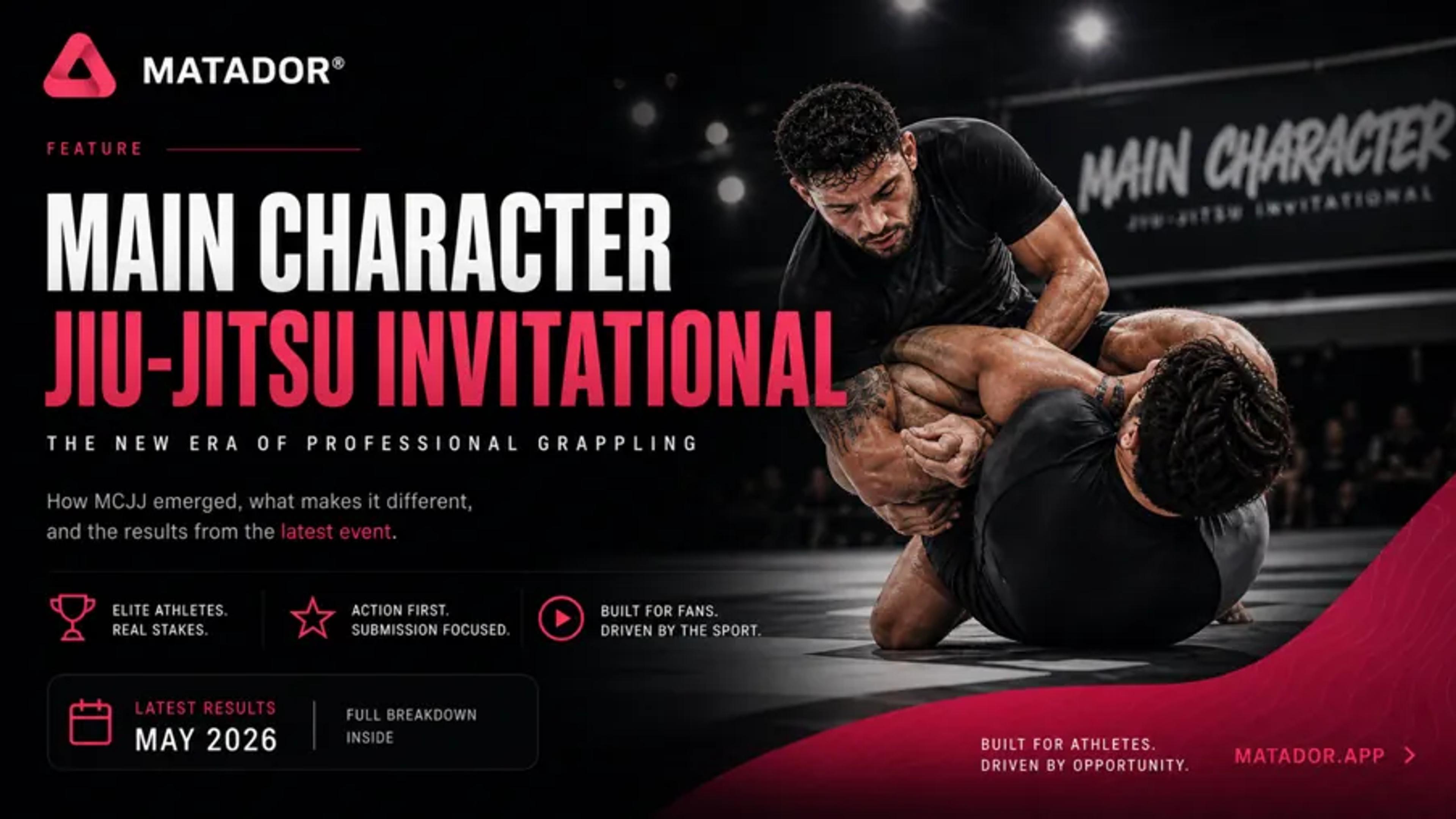
The Main Character Jiu-Jitsu Invitational (MCJJ) is part of a noticeable shift in how Brazilian Jiu-Jitsu is being presented right now. Instead of long brackets and drawn-out points matches, it’s built around a simple idea: put the right athletes together, give them something real to fight for, and let the match play out in a way people actually want to watch. It’s a curated invitational, not an open tournament, which means every matchup is there for a reason and every result carries weight.
That format didn’t come out of nowhere. Over the past few years, the no-gi scene, especially out of Austin, Texas, has been pushing things in this direction. More athletes are stepping away from the traditional system, looking for better pay, more visibility, and more control over when and how they compete. Events like the Craig Jones Invitational showed what happens when you treat grappling like a serious spectator product rather than just a niche competition. MCJJ sits in that same lane, just tighter and more frequent, focused on building cards that feel like actual fight nights rather than long tournament days.
What makes it stand out is how deliberate everything feels. Athletes are invited, not filtered through brackets, so you don’t get random matchups, you get fights people actually want to see. Titles are on the line across the card, which gives structure to the event and something to follow over time. And the matches themselves tend to move. There’s a clear bias toward action, less stalling, more intent to finish, which changes the pace straight away. Even if it goes to a decision, it rarely feels like nothing happened.
The most recent event took place on May 3rd, 2026, closing out what was branded as “MCJJ Super Week” in Austin, a multi-day run of events, training sessions, and superfights that built momentum into the main invitational card. That structure matters. Instead of a single standalone event, it creates a build-up, keeps athletes and fans engaged across several days, and makes the final card feel like the peak rather than just another show.
On the mats, it delivered what the format promises. Marlon Tajik took the middleweight title with a clean ankle lock that came on quickly once he found the position, Amanda Bruse locked up an armbar to claim bantamweight gold, and Gianni Grippo edged a tight decision in a match that could’ve gone either way depending on how you scored it. Josh Cisneros controlled his division from start to finish, while Jaine Fragoso added another title with a composed performance that never really got out of her hands. Across the card, the tone was consistent, people were there to push the pace, not manage it.
That’s really the bigger point here. Events like MCJJ aren’t trying to replace traditional tournaments, but they are pulling attention for a reason. They’re easier to follow, easier to watch, and they give athletes a chance to build something around their name instead of just collecting medals. You’re starting to see grappling move into a space where the matches matter, but so does the way they’re presented, who’s on the card, how it’s promoted, and what people remember afterwards.
The Main Character Jiu-Jitsu Invitational feels like it’s right in the middle of that shift. It’s not the biggest show out there, but it doesn’t need to be. It’s consistent, it’s focused, and it understands what makes people tune in. If this is the direction the sport keeps moving in, and it probably is, then events like this won’t feel like alternatives for long. They’ll just be part of how Jiu-Jitsu works.