News · BJJ
Sula-Mae Loewenthal and the Rise of the New Generation of British Jiu-Jitsu
There is a new generation of British grapplers beginning to emerge - athletes who grew up inside the modern no-gi era rather than transitioning into it later. Athletes who are equally comfortable coaching, competing, travelling internationally, and stepping onto professional stages like ADCC and Polaris.
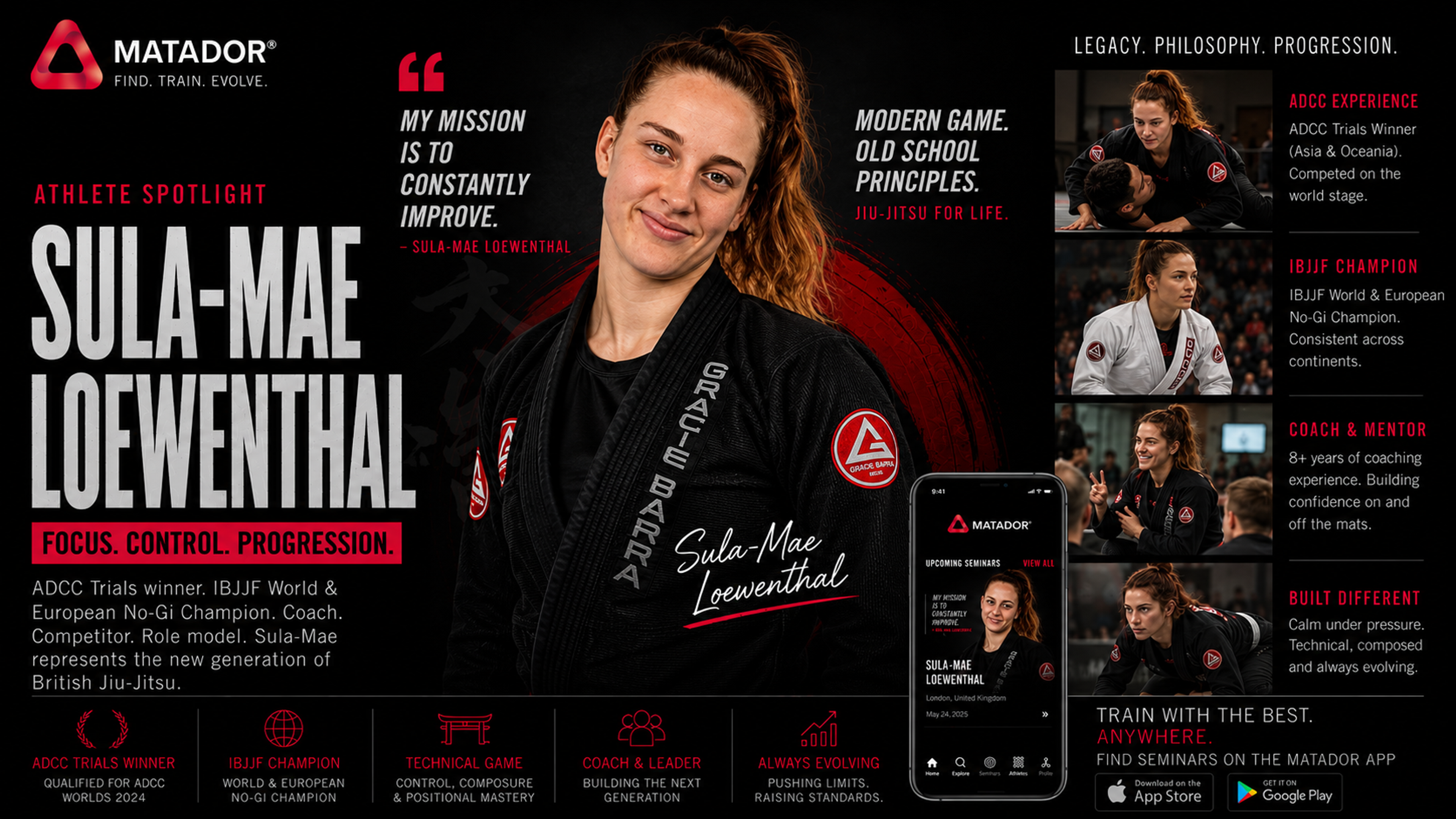
Sula-Mae Loewenthal is part of that movement.
Over the last few years, she has quietly built one of the more interesting resumes in European grappling, combining IBJJF success, ADCC qualification, coaching experience, and appearances on major professional stages. But what makes her stand out is not just the results themselves. It is the way she approaches the sport.
There is a calmness to her jiu-jitsu that reflects a wider philosophy - one built around progression, composure, and long-term development rather than hype alone.
From the British Scene to ADCC
British jiu-jitsu has evolved dramatically over the last decade. What was once considered a smaller regional scene is now producing athletes capable of competing globally in both gi and no-gi formats.
Sula-Mae’s rise reflects that evolution perfectly.
Before reaching ADCC and Polaris, she had already established herself through consistent performances across IBJJF competition, building experience through both gi and no-gi tournaments across Europe. Her progression through the coloured belts was marked not by one viral moment, but by steady development and competition maturity.
That development culminated in one of the biggest milestones in grappling - qualification for ADCC Worlds after winning the Asia & Oceania ADCC Trials at -65kg.
For many grapplers, ADCC represents the highest level of no-gi competition in the world. Reaching that stage changes how athletes are viewed internationally. It also changes the level of pressure they face.
What makes Sula-Mae’s story interesting is that she did not arrive there through noise or theatrics. She arrived there through consistency.
Control, Patience, and Composure
Modern no-gi grappling often revolves around speed, scrambles, and explosive exchanges. Sula-Mae’s style feels different.
Her game appears heavily rooted in control and composure, with strong use of closed guard, positional management, and structured transitions rather than chaos-driven movement. That balance between traditional positional awareness and modern no-gi adaptability is part of what makes her difficult to categorise.
During coverage of her ADCC Trials run, observers noted how effectively she used closed guard to slow opponents down and dictate tempo - something many athletes in modern no-gi have moved away from entirely. Yet in her hands, it became a weapon again.
That says a lot about her approach overall.
Rather than chasing trends blindly, she appears focused on developing systems that fit her game and personality.
The Mental Side of Competition
One of the most compelling parts of Sula-Mae’s story is how openly she speaks about pressure, identity, and growth inside the sport.
In recent interviews discussing ADCC preparation and major competition experiences, she spoke about shifting her focus away from external validation and results alone.
That perspective matters because modern grappling can easily become consumed by comparison:
- medals
- rankings
- social media
- superfights
- constant pressure to perform
Sula-Mae’s outlook feels more grounded.
She stated publicly:
“My mission is to constantly improve.”
That sentence captures a lot about her trajectory so far.
Her progression through:
- IBJJF competition
- ADCC qualification
- Polaris appearances
- professional superfights
does not feel rushed. It feels built.
Polaris, Professional Grappling, and the New Era
As women’s grappling continues growing, professional shows like Polaris have become increasingly important. They give athletes larger audiences, better visibility, and opportunities to build careers beyond tournaments alone.
Sula-Mae’s inclusion on Polaris cards - including her title fight with Helena Crevar - positioned her alongside some of the biggest names in modern women’s grappling.
That matters not just for her personally, but for British grappling more broadly.
For years, elite women’s jiu-jitsu was often associated primarily with Brazil or the United States. The European scene is now changing that, and athletes like Sula-Mae are part of the reason why.
Coaching, Community, and Women’s Jiu-Jitsu
Another thing that separates Sula-Mae from many competitors is her strong connection to coaching and community building.
While some athletes remain purely competition-focused, she has continued balancing coaching alongside elite-level competition. That combination often produces a very different type of instructor - someone who understands both the technical and emotional side of development.
She has also spoken openly about the importance of creating better pathways for women entering the sport, including the need for supportive environments and stronger community culture.
That is important because the growth of women’s jiu-jitsu is not just about producing champions. It is about retention, accessibility, and building an environment where more women stay in the sport long enough to reach their potential.
Athletes like Sula-Mae help shape that culture.
What You Learn from Watching Her Grapple
One of the reasons athletes like Sula-Mae are valuable in seminars and instructionals is that their jiu-jitsu feels applicable.
Her style does not rely entirely on athletic explosiveness or physical advantages. Instead, it emphasises:
- timing
- patience
- positional awareness
- structured attacks
- calmness under pressure
For beginners, that makes her approach easier to understand.
For experienced practitioners, it provides insight into how modern no-gi can still retain strong positional fundamentals rather than becoming purely scramble-based.
A Different Kind of Modern Grappler
What makes Sula-Mae interesting in today’s landscape is that she represents a more balanced version of modern grappling.
She competes at elite level, but still teaches.
She embraces modern no-gi, but still values structure.
She pushes herself competitively, but speaks honestly about pressure and sustainability.
That combination feels increasingly rare.
In many ways, she represents where British jiu-jitsu itself is heading:
- technically modern
- internationally competitive
- but still grounded in strong fundamentals and community
Accessing Athletes Like Sula-Mae Loewenthal
As the grappling world becomes more connected, discovering athletes like Sula-Mae is becoming easier through platforms like Matador.
Practitioners can explore athlete profiles, seminars, and events directly through the platform, helping connect the community beyond traditional gym networks.
👉 Explore athletes and seminars here:
Matador for iPhone
Final Thoughts
Sula-Mae Loewenthal represents one of the strongest examples of the new generation of British grapplers - technically modern, internationally active, and deeply connected to both coaching and competition.
Her rise through ADCC Trials, IBJJF competition, and Polaris reflects more than personal success. It reflects the continued growth of British and European jiu-jitsu as a whole.
And perhaps most importantly, her story shows that progression in grappling does not have to come through noise or spectacle alone.
Sometimes it comes through consistency, composure, and a relentless focus on improvement.