News · BJJ
The Evolution of British Jiu-Jitsu: From Traditional Foundations to the New School
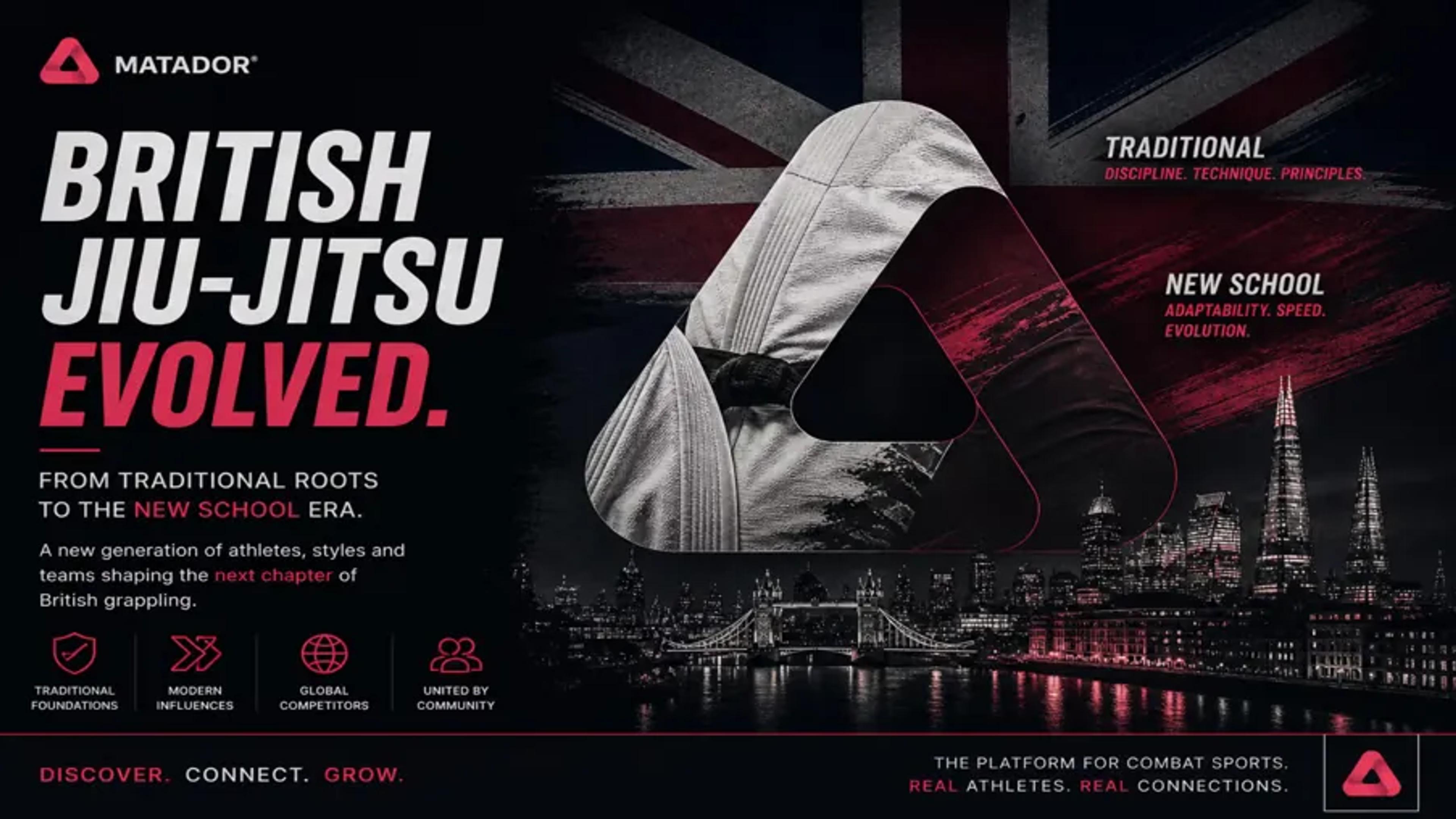
British jiu-jitsu has undergone a quiet but profound transformation over the past two decades. What began as a relatively small, tradition-driven community has developed into one of the most dynamic and adaptable grappling ecosystems in the world.
The shift hasn’t been sudden or accidental, it’s the result of layered influences, from early pioneers who built the foundations to a new generation redefining what British grappling looks like on the global stage.
In its earlier phase, the UK scene was heavily shaped by structure, discipline, and lineage. The influence of figures like Roger Gracie cannot be overstated. His approach, rooted in pressure, control, and fundamental efficiency set the tone for much of the early British game. Academies across the country adopted a style that prioritised positional dominance, patience, and technical clarity. This “old school” framework created a strong base, producing technically sound practitioners and laying the groundwork for long-term growth.
At the same time, there were early signs of divergence. Coaches and athletes with exposure to MMA began blending disciplines, incorporating wrestling, striking awareness, and a more dynamic approach to grappling. This cross-disciplinary influence started to loosen the rigidity of traditional systems and introduced a level of adaptability that would later become a defining trait of British jiu-jitsu.
Few athletes embody that bridge between traditional structure and modern evolution better than Daniel Strauss. As one of the most recognisable figures in the UK scene, Strauss built his reputation on a foundation of strong fundamentals while embracing a more fluid, expressive approach to movement. His influence extended beyond competition, shaping how jiu-jitsu is taught and communicated in the UK, particularly through his emphasis on creativity and understanding over rigid technique.
Alongside him, athletes like Owen Livesey highlight another critical layer of evolution: the integration of wrestling and judo into jiu-jitsu. Livesey’s background in elite-level judo has translated into a grappling style that places far greater emphasis on takedowns, balance, and top control—areas that were historically underdeveloped in many UK academies. His success reflects a broader shift, where starting from standing is no longer optional but essential.
If Strauss represents the philosophical bridge and Livesey the structural shift, then Ashley Williams represents the competitive proving ground of modern British grappling. Williams’ career has been shaped by consistent exposure to the highest levels of international no-gi competition, particularly through his performances in ADCC Trials and on professional stages like Polaris. His approach blends the technical discipline of traditional jiu-jitsu with the urgency and adaptability required in submission-only formats.
What makes Williams particularly significant in this evolution is not just his results, but the way he competes. His matches reflect a willingness to engage, to push pace, and to operate within the chaotic transitions that define modern grappling. At a time when the sport was shifting toward leg locks, scrambles, and positional fluidity, Williams was part of the cohort that embraced these changes early, helping to normalise them within the UK scene.
His experience competing against and training with international talent has fed directly back into the domestic ecosystem, raising expectations of what British athletes can achieve.
As the sport continued to evolve, the influence of no-gi competition accelerated change even further. Events structured around submission-only formats and ADCC-style rulesets forced athletes to adapt to faster, more aggressive exchanges. This environment favoured competitors who could blend techniques seamlessly, move through scrambles, and attack from unconventional positions.
Athletes like Eoghan O’Flanagan, Owen Jones and Faris Benlamkadem represent this shift toward a more modern, globally influenced style. Their approach reflects the increasing importance of leg lock systems, positional transitions, and a willingness to engage in chaotic exchanges that would have been avoided in more traditional formats. This is jiu-jitsu that is less about control for its own sake and more about constant threat and progression.
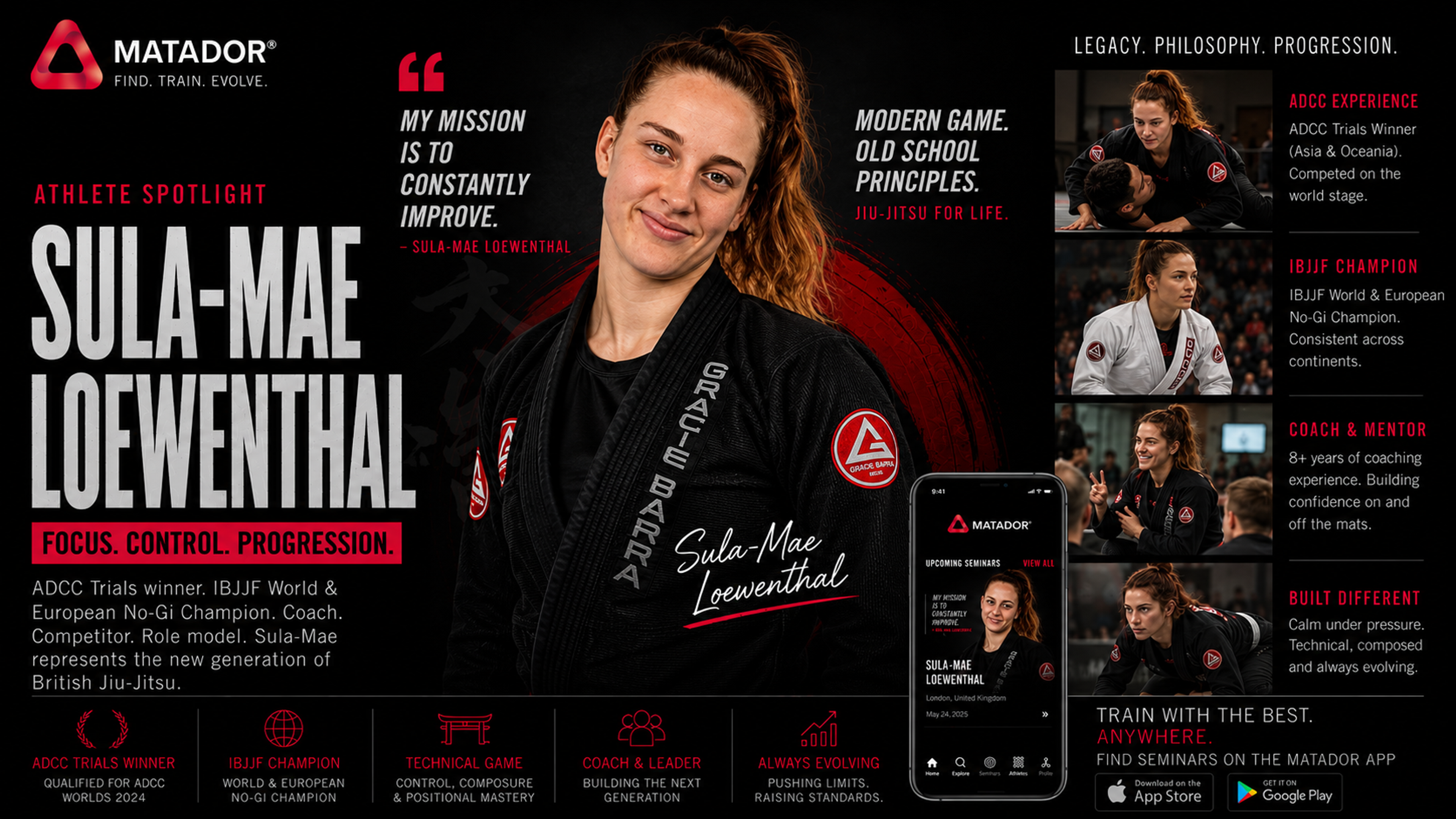
At the same time, the UK has seen the rise of highly competitive female athletes who are pushing the level of the sport forward. Ffion Davies has already established herself as one of the best in the world, while Sula Mae Lowenthal represents a new wave coming through with a style that blends technical precision with modern intensity. Their presence reflects not only growth in participation but also a shift in how the sport is structured and supported across the UK.
Another key factor in this evolution is the emergence of teams that are deliberately building around modern systems rather than traditional hierarchies. Groups like B-Team Jiu-Jitsu internationally, and closer to home collectives like Los Banditos, are influencing how athletes train, collaborate, and develop. The Los Banditos team, in particular, represents a new model within the UK one that emphasises openness, experimentation, and a strong alignment with contemporary no-gi trends. Rather than adhering strictly to lineage, these teams are focused on performance and adaptability, pulling from multiple influences to create something more fluid.
What emerges from all of this is a clear transition from “old school” to “new school.” The traditional British approach, built on structure and fundamentals, hasn’t disappeared - it remains an essential foundation. But it now coexists with a faster, more aggressive, and more globally connected style of grappling.
The modern British athlete is just as comfortable engaging in leg entanglements as they are controlling from mount, just as likely to wrestle from standing as to pull guard.
This hybridisation is what makes the UK scene particularly interesting today. It is not locked into a single identity. Instead, it is constantly evolving, shaped by international exposure, cross-training and a willingness to adopt new ideas quickly.
Another important aspect of this evolution is accessibility. Many of the athletes driving this shift including those mentioned here are not operating in isolation. They are teaching, travelling, and connecting with practitioners across the country. Platforms like Matador make it possible to reach and engage with these athletes directly, whether for seminars, collaborations, or training opportunities. While this access was once limited to those within specific academies or networks, it is now far more open, accelerating the spread of knowledge and raising the overall level of the sport.
British jiu-jitsu today is no longer defined by where it came from, but by how quickly it adapts. The transition from traditional to modern is not a replacement but an expansion. As more athletes continue to push the boundaries of what is possible, the UK is not just keeping pace with the global scene, it is actively contributing to its direction and to some extent shaping the international circuit. Link with some of these Athletes in our app today.